2 Jan 2023
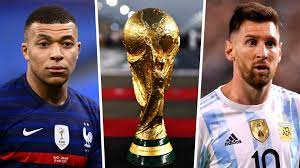
I was thrilled by the twists and turns of the 2022 FIFA World Cup Final between Argentina and France. The match began with Lionel Messi converting Argentina’s first penalty kick, followed shortly by a goal from Ángel Di María. I was impressed by the sheer determination of the Argentine team to win during the first half. With a 2–0 lead, however, Argentina appeared to shift from playing to win to playing not to lose during the second half.
That change in attitude nearly cost Argentina the World Cup.
At the 80th minute, Kylian Mbappé scored for France from a penalty kick. Almost immediately afterwards, at the 81st minute, he scored again. The two goals completely transformed the atmosphere of the match. Unable to contain their joy or disappointment, people in my neighbourhood shouted and screamed in the middle of the night.
During extra time, Argentina appeared to switch gears once again and resumed their attacking play, scoring another goal. The French team, however, refused to rest on its laurels. Mbappé responded with another penalty kick to level the score once more. As we know, Argentina eventually emerged victorious in the penalty shootout.
The match was a dramatic illustration of the difference between playing to win and playing not to lose.
Argentina’s transition from an attacking, winning mentality in the first half to a more defensive posture in the second half almost cost them the World Cup. Perhaps the strategy was not to rock the boat to play out the remaining time. Yet defensive play can sometimes be fuelled by overconfidence and complacency. The desire to protect what we have can gradually replace the determination that enabled us our success it in the first place.
This raises an important question for all of us:
How do we play the game of life?
Do we play to win, or do we play not to lose?
In his autobiography, Love, Pain & Money: The Making of a Billionaire, James Caudwell describes himself as competitive and always playing to win. [1] Judging by the material wealth he has accumulated, he has certainly made good use of his talents to achieve considerable success by conventional standards. Yet he has not stopped at personal success. He has also shared his good fortune through philanthropy.
Hence, playing to win is more than accumulating wealth, defeating competitors, or achieving social status. It can mean living life by using our talents to the fullest, reflecting on our identity, finding meaning and purpose, sharing our blessings, and contributing to the betterment of the world.
By contrast, playing not to lose often reflects a status quo mentality. It can impede growth and prevent us from reaching our potential. Many people become dismayed and frustrated by stagnation in their careers and financial lives because they understand the danger of becoming redundant or obsolete. In a rapidly changing world, simply holding on to our existing position, i.e. without growth, is not good enough. What once guaranteed success may eventually become inadequate.
The same principle applies to life more broadly.
A person may spend years trying to keep up with the Joneses, comparing possessions, achievements, lifestyles, and social status with others. Yet such a life can become self-centred, exhausting, and ultimately empty. We may become so focused on maintaining our position in society that we lose sight of our neighbours, our communities, and the environment around us.
That is not genuine growth.
Life becomes more fulfilling and meaningful when we remain open to change and continue to grow in the various dimensions of our existence—professionally, physically, emotionally, mentally, psychologically, and spiritually.
Playing to win, however, can take many forms. It does not necessarily mean defeating an opponent. Sometimes, the person we need to overcome is ourselves.
We can play to win in our personal growth. We can play to strengthen our mental health, develop emotional maturity, and learn to manage our thoughts, feelings, and reactions more effectively. We can play to become more compassionate, wiser, more resilient, and more authentic.
Successful investors often remind us that the greater challenge is managing our own emotions and reactions to the market than beating the market. Peter Lynch, the legendary fund manager, once said, “The real key to making money in stocks is not to get scared out of them.” [2]
In this sense, beating the market may ultimately mean winning the battle against our own ego and fear. It becomes an inner journey rather than merely an external competition.
Instead of constantly trying to win against other people, what if we competed to become a better version of ourselves? What if our goal were to be a better person today than we were yesterday?
We are, in many ways, our own ultimate competitor.
When we compete with ourselves, our potential and goodness are not limited by an opponent’s abilities. We are free to dream about the person we aspire to become. We need not be entirely defined by our parents, society, our past, or even social media.
Simon Sinek once said, “We achieve more when we chase the dream instead of the competition.” [3]
There is great wisdom in this observation. When we focus exclusively on competing with others, our direction is determined by them. We become preoccupied with what they are doing, what they have achieved, and how we compare with them. But when we pursue a dream, our attention shifts from comparison to purpose.
We begin to ask different questions:
What kind of person do I want to become?
What gifts and talents have I been given?
What is meaningful to me?
What contribution can I make?
In my own pursuit of personal growth, I have discovered that the more I learn, the more I realise how much I do not know. This is particularly true in the areas of self-knowledge and spirituality. The deeper I explore these dimensions, the more I encounter a sphere that appears boundless and infinite—the mystery of God and the mystery of our own existence.
Interestingly, this realisation does not frustrate me. Instead, it humbles me.
There is a strange peace in recognising that we do not need to understand everything. The desire to know everything can sometimes arise from the ego’s need for control. Yet the deeper we journey into self-knowledge and spirituality, the more we may discover that wisdom also involves accepting mystery.
For me, this experience brings a sense of peace and harmony. It pushes me into what the spiritual tradition calls “the cloud of unknowing”—a place where the limits of intellectual understanding are acknowledged and one encounters the mystery of existence with humility.
That is part of my game in life. That is my way of playing to win.
Not by defeating others. Not by accumulating the most possessions. Not by constantly comparing myself with those around me.
Rather, I seek to win by becoming more fully who I am capable of becoming. I seek to grow in wisdom, compassion, understanding, and love. I seek to use my talents meaningfully, to continue learning, to share my blessings, and to contribute, however modestly, to the lives of others.
So, where is the playing field in your life?
How have you been performing?
Are you playing to win, or are you merely playing not to lose?
Perhaps, at the beginning of a new year—or at any point when we pause to reflect—it is worthwhile to take stock of our lives. We can examine our personal growth, our relationships, our careers, our physical and emotional well-being, and our inner journey, including our growth, discovery, our purpose, and pursuing a meaningful dream,
The final score of a football match is determined by goals scored on the field. The score of our lives, however, is measured by the person we have become, the challenges we have overcome, the wisdom we have gained, the lives we have touched, and the love we have shared.
The question, therefore, is not simply whether we win or lose.
The deeper question is:
Are we playing the game of life with courage, purpose, and determination—or are we merely trying not to lose?
[1] John Caudwell: Love Pain and Money, n.d., chapter 3 according to the audiobook.
[2] Peter Lynch, Beating the Street (Simon and Schuster, 2012), 36.
[3] Simon Sinek [@simonsinek], “We Achieve More When We Chase the Dream Instead of the Competition.,” Tweet, Twitter, November 1, 2021, https://twitter.com/simonsinek/status/1455152141190959104.