I desire to spend my birthdays with my maker in a retreat. As I could not go at the end of last year, I reminisced about my retreat in Peter Canisius House in Pymble, New South Wales, Australia, last year; I found this prose.
A Concert of the Earth
As the sun dips below the horizon, casting a warm glow across the landscape, the birds offer their final chirps and tweets of the day. Sensing the arrival of night, the crickets begin their melodic serenade, their rhythmic chirping calling for a mate. Amid the howling and whispering of the wind, the voices of the birds create a symphony of nature—unorchestrated and yet harmonious in its dynamic flow.
The leaves sway on the trees, and the vibrant flowers sprouting from the bushes join in, dancing in response to the urges of the wind. Together with the music of nature, these dancers form a concert of the earth, one that requires no conductor yet resonates deeply within the soul.
Solitude Amidst the Symphony
Nature offers me both comfort and company. The cool breeze caresses my skin and gently nudges my awareness of the presence that surrounds me. Though I find myself in solitude, I am never truly alone.
Have I ever been alone?
Not when I set aside my fears and conditioned thoughts. Not when I tune my senses to the sights, sounds, and textures of the world around me. Not when I remain present, fully aware of the awe and beauty that nature reveals.
Breaking the Illusion of Aloneness
My ego and blindness create the illusion of isolation, trapping me in the false notion of aloneness. When I banish these barriers, the truth reveals itself.
How can I ever be alone when I immerse myself in the fellowship of God’s creation? The rustling leaves, the whispering winds, and the vibrant life surrounding me speak of connection and belonging.
A Spiritual Fellowship
This divine symphony reminds me that I belong to something far greater than myself. In the harmony of nature, I find a reflection of God’s handiwork, of which I am a part. It whispers that I have never been alone and never will be. When I quiet my mind and open my heart, I find an invitation to embrace my surroundings with gratitude and awe. I realise that solitude is not aloneness or emptiness; instead, it is communion.
So here I sit, enveloped by the concert of the earth, a willing participant in this fellowship of creation. In communion with nature, I am reminded of an eternal truth: I am surrounded. I am connected. I am loved.
In the documentary, The Lost Leonardo, a New Orleans auction house sold a painting, ‘Salvator Mundi’, for $1,175 to Alexander Parish. Parish is a sleeper hunter who recognizes unvalued paintings by better artists that the auction house has not. A renowned art historian and restorer, Dianne Modestini, Parish, and his financial partner Robert Simon ascertained it to be a Leonardo. Despite the Leonardo Da Vinci experts Frank Zoller and Jacques Franck and art critics Jerry Saltz and Kenny Schachter questioning its authenticity as a Leonardo, the National Gallery, London exhibited the painting as a Leonardo. The documentary shifts gear from the Art Game to the Money Game where its market is managed by the predator of greed.
Over the years, Salvator Mundi’s value bumped to $127.5 million, eventually becoming the most expensive painting ever sold at $450 million. The value of artwork in the money market fluctuates by its complexity setting, and with players fueled with personal agenda and greed.
Evan Beard, Senior Vice President of National Art Services Executive in Bank of America, pointed out that Salvator Mundi would value as $1,175 if painted by a follower of da Vinci, and the value would escalate if it was by a student and exponentiated if it was by the Master himself. Should the painting, currently alleged to be part of a private collection in Saudi Arabia, be authenticated one day by a renowned da Vinic expert, that it was by his student or follower, its value could have plunged overnight. Some high net-worth individuals had lost their fortune overnight. German billionaire Adolf Merckel committed suicide when his business empire ran into financial trouble in the Global Financial Crisis in Jan 2009[1].
Similarly, when we allow our self-worth to be determined by the world outside ourselves, we are subject to the external wavering trends, values, and goalposts.
Apart from material wealth, living in a culture that celebrates achievements, extraordinary, outstanding accomplishments push us to excellence and perfection to gain external recognition. We lend our identity to the job title we hold, the brand of bags we carry, and the address of our abode. Putting up an image that is not true to our personality and a job that gives little joy is like salmons swimming upstream to spawn, but ending in exhaustion, and compromising our individuality. When we measure our worth by fame, popularity, appraisal, opinion, and material wealth, we tend to compete and conform to the world’s expectations. We could lose ourselves to competition and conformity.
In her book, The Gifts of Imperfection. Let Go of Who You Think You’re Supposed to Be and Embrace Who You Are, Brené Brown highlights,“The comparison mandate becomes this crushing paradox of “fit in and stand out!” It’s not to cultivate self-acceptance, belonging, and authenticity; it’s be just like everyone else, but better.”[2]
We do not see a duck climbing a tree or whales living out of water. Each of us is uniquely created with distinctive features, characters, temperaments, talents, charisms, gifts, DNA, etc. Instead of “fit-in and stand out” to the guys and gals next to us, we could “fit-in” ourselves by nurturing self-acceptance, being comfortable in our skin, and allowing our talents and gifts to stand out. According to Socrates, “an unexamined life was not worth living.”
Another famous Greek philosopher, Aristotle, once said that knowing yourself is the beginning of all wisdom.
Rather than channeling our energy to seek validation from the world, we could take stock of our strengths, weaknesses, talents, aptitudes, and limitations. It takes honesty, courage, and perseverance to discover what jobs, vocations, hobbies, activities, and communities are life-giving and to acknowledge and accept what drains our energy. Coupled with examining our values, be it integrity, kindness, generosity, or gratitude that we hold dearly and uncompromisingly, we move towards finding our true identity and life mission.
Knowing oneself is a treasure we find within ourselves that moth and rust cannot destroy, and thieves cannot steal. The treasure could shape our core values and self-image, defining who we are. Living out of our true image and identity, our inner light then shines. We live a fulfilling life when our self-worth is built on rock rather than sand.
Perhaps it is time to be like the sleeper hunter to quest our worth through our innate qualities, talents, and gifts. When we learn to embrace and hone them, we live out an “authentic me” where the external valuation and authentication are unneeded as each of us is unique and exquisitely priceless.
[1] “Billionaire Kills Himself over Financial Crisis,” NBC News, January 6, 2009, https://www.nbcnews.com/id/wbna28522036.
[2]Breň Brown, The Gifts of Imperfection: Let Go of Who You Think You’re Supposed to Be and Embrace Who You Are(Hazelden Publishing, 2010), p95.
The mark of ashes on my forehead on Ash Wednesday reminded me of my mortality and need for repentance and forgiveness. Concurrently, I recalled the recent funeral of Auntie Tessie, witnessing her coffin wheeled to the furnace in the crematorium and participating in the Rite of Committal to rest the interment of her ashes in the columbarium.
Auntie Tessie passed away on 31 Jan 2023, less than a month before Ash Wednesday. Knowing that I am the only Christian at home, Auntie Tessie invited me to join her family for Christmas lunch every year. Over the last two years after the easing of Covid-19 measures, our long lunches stretched to almost dinner time catching up with the time lost during Covid-19. Over the years, I enjoyed listening to stories of her youth and education in India (fortunately, her education was not disrupted by WWII), her discernment for vocation, her married life, and her faith. Her daily habit of reading the Bible and biblical literature even weeks before her death was inspiring. While her body had become ashes in the columbarium, her exemplary loving life remains as a model to pursue a life of faith.
The ashes for Ash Wednesday are residuals from the burning palm fronds used in the previous year’s Palm Sunday celebration by the faithful to wave in memorial of welcoming Jesus’s entry to Jerusalem just days before he was crucified. These ashes were once fresh fronds branching their life out of a stem, finding their individualism, and identity, growing towards the light, and displaying the glory of the Lord.
Like the fresh palm frond constantly drawing water and nutrients from the branch, Auntie Tessie lived a faithful fruitful life drawing strength and wisdom from scriptures and prayers. Unlike the palm, which lost its vitality and luster once cut off from the stem and which would eventually be burned into ashes, I believe in her faithful devotion. Auntie Tessie has transcended from ashes to continue to be nourished and live eternally under the perpetual light.
“Abide in me as I abide in you. Just as the branch cannot bear fruit by itself unless it abides in the vine, neither can you unless you abide in me.” (John 15:4)
Between the short span of Epiphany (which marks the end of the Christmas season) and Ash Wednesday, I underwent two unexpected incidences – surgery and the death of Auntie Tessie. These two unexpected events left me with the guilt of being undisciplined in my medical check-up and not spending more time with Auntie Tessie. Instead of dwelling in guilt, I allow my regret as a compass to review my priority in life and learn the importance of seizing the day. Carpe Diem.
Teach us to realize the brevity of life, so that we may grow in wisdom. (Ps 90:12)
Lent presents a time for me to take stock of the values I placed in my life. Hopefully, there have not been too much on lesser things. It is time to release desire for temporal earthly attractions and possessions to focus on eternal standing.
19 “Do not store up for yourselves treasures on earth, where moth and rust consume and where thieves break in and steal; 20 but store up for yourselves treasures in heaven, where neither moth nor rust consumes and where thieves do not break in and steal. 21 For where your treasure is, there your heart will be also. (Mt 6:21)
In my repentance for the misplacement of my gifts and resources, I sanctify my interior space for rooms in seeking God’s will for a more faithful and purposeful life.
“Truly I tell you, whatever you bind on earth will be bound in heaven, and whatever you loose on earth will be loosed in heaven.” (Mt 18:18)
Ash Wednesday reminds me of becoming ashes one day, and every day is closer to that day. Nothing is certain in life except for our return to God. In regular prayer, repentance, and purification, I hope to join Auntie Tessie and the faithful at home with God one day.
“A lump has shown up in your mammogram and the ultrasound confirmed it.” I doubt anyone ever expects these words to be said to them, yet they were said to me here.
The doctor proposed a keyhole procedure to remove the lump to get a more accurate biopsy and avoid future complications. As it was already late in the afternoon, the surgery was scheduled for 9 am the next morning, two days before the Lunar New Year.
The urgency of the unexpected procedure sent shivers down my spine. I made arrangements for a faith formation session that very evening to pray in the adoration room. Although I was not fearful of meeting my maker, I still had an unsettling feeling that I could not explain. I was confused and perplexed.
Nevertheless, I pushed through and prayed, and in the thick of my restlessness, the mystery of my disconcertment was revealed – my mother. As the sole caregiver of my aging mother, I begged God with all my love for my mother, not to let me go before her.
In the midst of my distress, I was comforted by the words, “I am with you.” In my perturbing mind, I was consoled by His presence, knowing that when He was with me, nothing would be against me. Yet, a small part of me wondered if His presence meant that a bigger ordeal was coming my way. But I brushed this pointless thought aside and held onto His promise. Clinging to that promise, I attended an evening Mass and sought the Sacrament of Reconciliation after Mass.
When I asked a priest friend to pray for me, he offered to send me to the hospital for my procedure and prayed with me before the surgery. I was grateful that God sent his angels to me. After the prayer, a sense of calmness washed over me and stayed with me throughout the procedure.
However, a shadow of ambiguity fell over the Lunar New Year celebration. While I recovered well from the surgery, evidenced by the subsidising pain, my anxiety crept in as the next appointment approached.
The day before my biopsy result and bandage removal, I texted a few close friends who already knew about my procedure to pray for me. Part of me questioned the purpose of the prayer when the result was already at the doctor’s office. Regardless of this errant thought, these prayer warriors were steadfast in their prayers for me.
Again, I searched for the source of my nervousness. Anxiety comes from the lack of trust in the Lord. In such a situation, shouldn’t I cling tighter to my faith? Yes, I know. I could almost hear Jesus childing me, “man of little faith.” I was now Peter as he was walking on water and now drowning in my anxiety as I took my eyes off Jesus, focusing instead on the wind and the possible storm. (Mt 14:28-33[1])
The unanticipated episode carried a lot of uncertainty. My mind went through various “what if” scenarios in preparation for the worst. So what if I got cancer? It happened to many women out there, too. In my prayer, I realised that my anxiety stemmed not from the possible adverse results but rather from the agony of suspense.
In the space of darkness, there was nothing for me to grasp. There was no room to be in control, and all plans and dreams were put on hold.
No wonder when the Israelites were wandering in the desert, they preferred to return to slavery in Egypt (Ex 16:1-3[2]; Num 14:1-4[3]). Because amid their suffering, knowing what would come next in the predictable and familiar environment offered a warped sense of security and assurance. The pain of captivity was strangely more bearable and triumphed over the agony of unknowing.
Dwelling on the need to know brings out the insecurity in me. It reminds me of the temptation of the fruit of knowledge in the Garden of Eden (Gen 3:1-7[4]). I asked myself about the momentous choice I could have made; I could have found something to distract myself – read a book, watch a drama series on Netflix, bake a cake, et cetera. Alternatively, I could sit in the discomfort of the uncertainty and ambiguity. I chose the latter because how long could I read the book or watch Netflix?
I sat and befriended my anxiety and nervousness. My helplessness and vulnerability brought me deeper into humility before God. I turned my attention from the spineless Israelites wandering in the desert to the faithful Abraham on his journey to the unknown. I chose to be mindful of my thoughts and emotions rather than let them wander.
A message from a friend came, “Be strong.” It simply reminded me to draw strength from God and to manage my mind. Reciting the rosary and Divine Mercy had proven helpful to ground myself in the present and, at the same time, appreciate the mystery of life. It made me feel grateful for my spiritual practices over the years.
After a week of waiting in agony, I was thankful to God that the lump was benign. However, the case required regular close monitoring. So while the ambiguity continued, I was no longer unsettled.
This experience took me out of my mundane life. I imagined it as immersing myself in an icy cold bath where my nerves are shocked and stimulated. I feel vulnerable yet alive. I was touched by the essence of life, a life not to be grasped but a life to live. Living in the unknown, we are all called to faith. A faith with hope, a faith in the love of God. The mystery of life is ever-present, but it is a mystery not to be solved, but rather to be embraced.
Kelly Tan
13 Feb 2023
[1]Mt 14:28-33. Peter answered him, “Lord, if it is you, command me to come to you on the water.”He said, “Come.” So Peter got out of the boat, started walking on the water, and came toward Jesus. But when he noticed the strong wind, he became frightened, and beginning to sink, he cried out, “Lord, save me!” Jesus immediately reached out his hand and caught him, saying to him, “You of little faith, why did you doubt?” 32 When they got into the boat, the wind ceased.And those in the boat worshiped him, saying, “Truly you are the Son of God.” (NRSVCE)
[2]Exodus 16:1-3The whole congregation of the Israelites set out from Elim; and Israel came to the wilderness of Sin, which is between Elim and Sinai, on the fifteenth day of the second month after they had departed from the land of Egypt. The whole congregation of the Israelites complained against Moses and Aaron in the wilderness. The Israelites said to them, “If only we had died by the hand of the Lord in the land of Egypt, when we sat by the fleshpots and ate our fill of bread; for you have brought us out into this wilderness to kill this whole assembly with hunger.” (NRSVCE)
[3]Num 14:1-4 Then all the congregation raised a loud cry, and the people wept that night. And all the Israelites complained against Moses and Aaron; the whole congregation said to them, “Would that we had died in the land of Egypt! Or would that we had died in this wilderness! Why is the Lord bringing us into this land to fall by the sword? Our wives and our little ones will become booty; would it not be better for us to go back to Egypt?” So they said to one another, “Let us choose a captain, and go back to Egypt.” (NRSVCE)
[4]Gen 3:1-7 Now the serpent was more crafty than any other wild animal that the Lord God had made. He said to the woman, “Did God say, ‘You shall not eat from any tree in the garden’?” 2 The woman said to the serpent, “We may eat of the fruit of the trees in the garden, 3 but God said, You shall not eat of the fruit of the tree that is in the middle of the garden, nor shall you touch it, or you shall die.’ ” But the serpent said to the woman, “You will not die, for God knows that when you eat of it your eyes will be opened, and you will be like God, knowing good and evil.” So when the woman saw that the tree was good for food and that it was a delight to the eyes and that the tree was to be desired to make one wise, she took of its fruit and ate, and she also gave some to her husband, who was with her, and he ate. Then the eyes of both were opened, and they knew that they were naked, and they sewed fig leaves together and made loincloths for themselves. (NRSVCE)
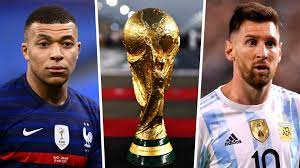
I was thrilled by the twists and turns of events in the World Cup Football Final 2022 between Argentina and France, beginning with Messi’s first penalty kick and followed shortly by a goal to the credit of Di Maria. I was impressed with the sheer determination of the Argentina team to win during the first half. With 2-0 in her favor, Argentina shifted to playing not to lose in the 2nd half. However, a goal from the penalty kick by Mbappe of France at the 80th minute followed by an almost immediate unexpected goal also by Mbappe at the 81st minute changed the entire atmosphere. Unable to contain the joy or disappointment, my neighborhood shouted and screamed in the middle of the night. In the extra time, Argentina switched gears to attack again and scored another goal. The French did not rest on their laurels and matched a goal with a penalty kick to even the score. As we know by now, Argentina finally emerged as the winner on penalties.
The switch from play to win in the first half to play not to lose in the second half nearly cost Argentina the World Cup. While it may be the strategy not to rock the boat and to play out the time, the defensive play seemed to be fueled by an over-confident and complacent attitude.
How do we play in our game of life? Do we play to win or play not to lose? In his autobiography, Love, Pain & Money: The Making of a Billionaire, James Caudwell claimed to be competitive and always plays to win.[1]Obviously, with his accumulated material wealth, he has emerged as a winner and successful by world standards. He does not stop counting his blessings but shares his good fortune as a philanthropist. Hence, play to win encompasses living out life using our talents to the fullest, reflecting and recollecting what is important to us, finding meanings and purposes of our life, sharing our blessings, and making the world a better place.
On the other hand, play not to lose adopts the status quo attitude impeding growth. We are often dismayed and frustrated over stagnation in our career and economic progression because we understand the danger of becoming redundant and obsolete and eventually being pushed over by competition, not unlike Argentina in the World Cup final. Hence, holding on to our position with no growth is not good enough. Furthermore, living a life catching up with the Joneses, oblivious to the needs of our neighbors and environment, is self-centered and exhausting. It is not real growth. On the other hand, life is fulfilling and meaningful when we seek change and keep abreast in various areas of our life, be it professional, physical, emotional, mental, psychological, or spiritual.
To be energized and fulfilled, playing to win can cut in many ways. It does not always mean to down our opponent, but to win in our personal growth, strengthening our mental health, and better managing our emotions. Long-time successful investors would tell you that you are not to beat the market but manage your own emotions and reactions to the market. According to Peter Lynch, a legendary fund manager, “the real key of making money in stocks is not to get scared out of them.”[2] Hence, beating the market is to win over our ego and fear, tantamount to taking a walk into our inner journey. Rather than winning from external competition, how about competing to be a “better me” today than yesterday? We are our own ultimate competitor. In competing with oneself, our potential and goodness are not limited by an opponent. We are free to dream who we inspire to be, not bounded by our parents and society, and of course, not the social media. Simon Sinek once said, “we achieve more when we chase the dream instead of the competition.”[3]
In my pursuit of personal growth, I experience that the more I learn, the more I do not know, particularly in knowing-thy-self and spiritually, where the sphere is boundless and infinite, the mystery of God. Interestingly, it does not frustrate me. Instead, it humbles me with peace and harmony, shoving me into “the cloud of unknowing.” That is my game in the life of playing to win.
Where is the playing field in your life, and how have you been performing? At this beginning of the year, perhaps it is time to take stock and look into your personal growth and inner journey.
[1]John Caudwell: Love Pain and Money, n.d., chapter 3 according to the audiobook.
[2] Peter Lynch, Beating the Street (Simon and Schuster, 2012), 36.
[3] Simon Sinek [@simonsinek], “We Achieve More When We Chase the Dream Instead of the Competition.,” Tweet, Twitter, November 1, 2021, https://twitter.com/simonsinek/status/1455152141190959104.
During a recent trip to the nature park, I experienced photo shooting with a macro lens for the first time. In my usual ‘blur’ self, I signed up not knowing that the subjects were mainly insects, and my heart sank a little when I found out during the briefing before setting off.
During the walk into the nature park, my teacher pointed out a caterpillar on a tree trunk that was totally oblivious to me. It looked like a part of the tree trunk to the naked eye.
Through the macro lens, I saw with amazement the attractiveness of the caterpillar. Its shape, colors, the intrinsic details came alive. Like a little child, through the macro lens, my eyes glowed with awe at the beauty of the dragonfly and spider when these hardly noticeable insects were pointed out during my walk. As I trained my eyes to look out for the little creatures in the nature park, my little world began to open up.
What will I discover if I wear a pair of macro lenses in my life? How many people who have been oblivious to me, like the insects on the tree trunk, will stand out? They could be the aunty/janitor who cleans our toilets, a foreigner who keeps our streets clean, an older man who puts away our dirty plates in coffee shops, neighbors who share our lift and common areas, the officer behind the control station in the train station… They have been dressing so simply and dutifully present around us that they blend into the backdrop of our everyday lives.
What will I see, if I set my focus on them individually through the macro lens before I press the shutter button? What are the colors of their joy, pain, struggle, and hope? Perhaps their simplicity in life warrants them a beautiful shade of paint. What are the textures of their attitude, values, motivation, and outlook on life? Unless we look through a macro lens, we would not appreciate the richness of their lives.
Beauty is more than skin-deep. The unnoticeable small insects are part of the ecosystem. Each one is created to contribute to the food chain, ecological community, and environment in their unique way. An absence of any one of them will cause a disturbance to the environmental balance. Similarly, an absence of our fellow neighbors playing the unnoticeable roles which many take for granted will have a repercussion on our living conditions and environment, and society. This was experienced in 1979 when the dustmen in the London borough of Westminster went on strike. Rubbish was piled up in Soho and Leicester Square, causing a significant adverse effect on the lives of Londoners and tourists.
While I will not be able to access the colors and textures of life of the people I walk past every day, I can at least learn to notice and appreciate their existence and, where possible, acknowledge their presence with a smile and their contribution with a “thank you.”